

In the Power Semiconductors Primer we mapped the different stages of the power chain and named a shortlist of names worth a closer look. Ensure to give it a read below if you missed it:

In this follow-up, myself and AKS Research take three of those names and map out the bull and bear cases for each, alongside a look at their financials.
STMicroelectronics (STM), Navitas Semiconductor (NVTS), and Wolfspeed (WOLF) sit at very different points on the risk spectrum: STM is large and diversified, NVTS is small and speculative, and WOLF recently emerged from bankruptcy. We grouped them together here because they are all part of the power semiconductor buildout, with each playing a different but important role.
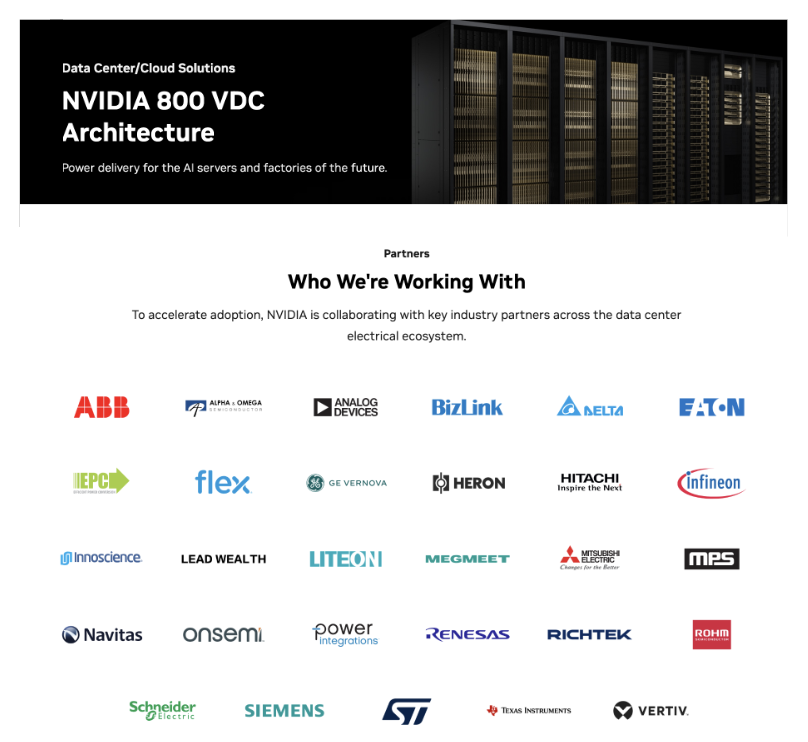
Two of the three names in this piece are named partners in NVIDIA's 800V architecture, which is a big catalyst behind the resurgence of the power semiconductor industry. STM and Navitas both sit on the list of silicon partners NVIDIA disclosed for its 800VDC AI factory ecosystem. Wolfspeed doesn't, but its AI datacentre exposure runs through LITEON, a systems integrator, which means they are one step removed from the NVIDIA ecosystem.
This post is for informational purposes only and does not constitute financial advice. Please conduct your own due diligence before purchasing any equities or assets discussed herein.
STMicroelectronics (STM)
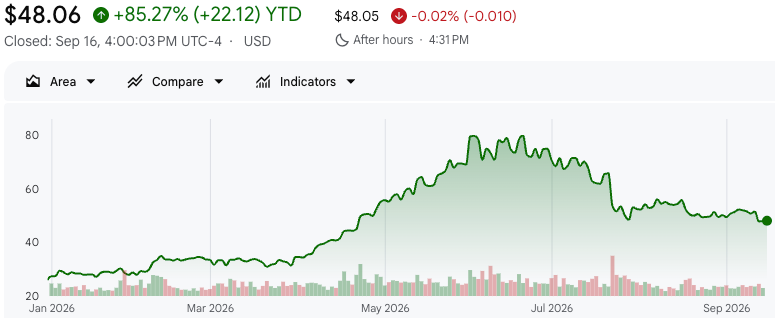
STM is an Integrated Device Manufacturer (IDM) that runs their own fabrication plants rather than relying on outside foundries. They sit at a ~$44B market cap, with a TTM revenue of $13.1 billion as of Q2 2026.
STM currently has the largest share of the SiC power device market (~33% as of 2023), but they are also expanding into PowerGaN devices with a brand new 700V GaN chip. The 700V enhancement-mode transistors (HEMTs) are designed to be used to manage the power in datacentres and Humanoid Robotics. As for their exposure to the industrial appliance market, they launched GaNSPIN drivers which allow manufacturers to swap out traditional silicon MOSFETs or IGBTs with a more energy-efficient alternative.
They’ve also been focusing heavily on supply chain contracts. They signed a development and manufacturing agreement with Innoscience, who is a global manufacturer of GaN-on-silicon products.
They have four major segments through which they earn majority of their revenue:
Analog products MEMS & Sensors (AM&S)
Power and Discrete products (P&D, SiC and GaN power devices)
Embedded Processing (EMP, microcontrollers for general purpose and automotive)
RF & Optical Communications (RFOC)
Bull case
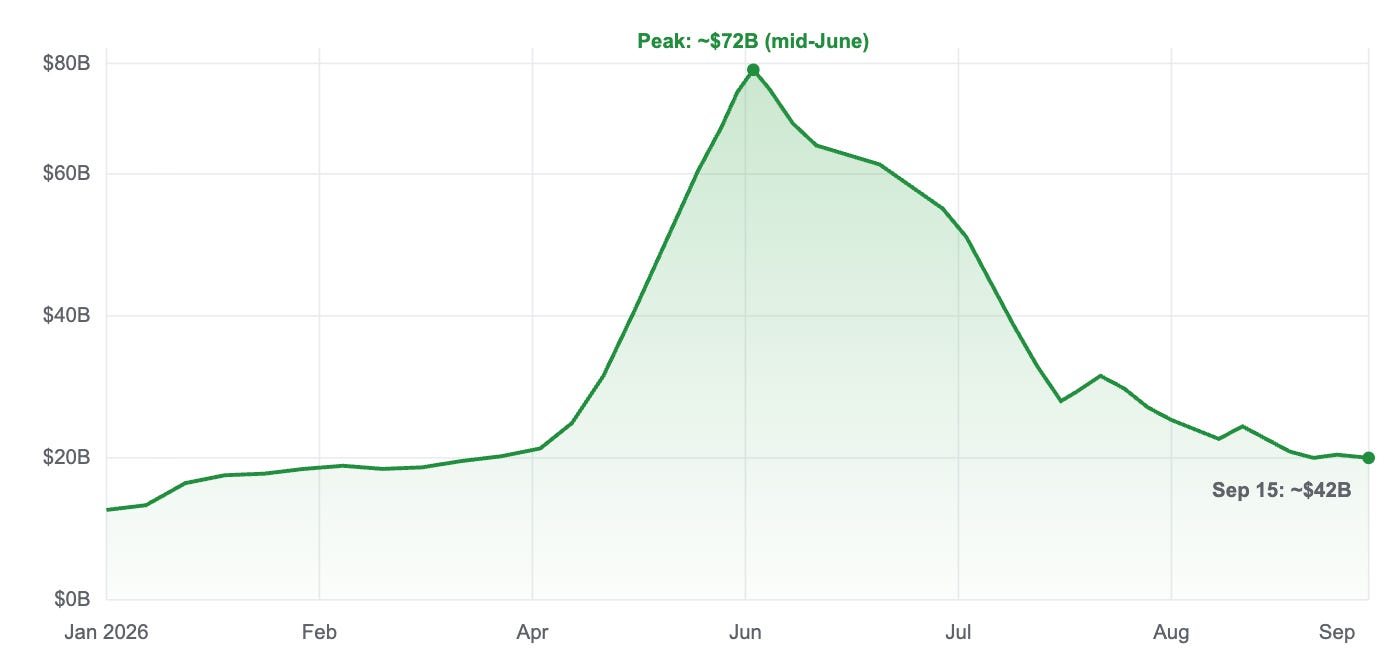
Their rise to a market cap above $70 billion in June was related to the market pricing in their multi-sector story, including contracts with AWS, SpaceX and NVIDIA. Since then, STM is down more than 40% from its June highs, largely due to margins in the loss-making SiC/EV segment deteriorating further than expected. The main question facing STM now is whether the selloff was an overcorrection. Did the market discount the stock as if their other sectors (which have gotten stronger over the same window) were struggling too?
STM is expanding its partnership with NVIDIA. STM developed new 12V and 6V architectures, which combine SiC and GaN power semiconductors. The 800VDC to 6V and 12V path allows increased efficiency during distribution from rack power shelves, and also reduces the number of conversion stages.
STM is one of the few power device suppliers with an in-house supply chain. They make the wafer supply themselves. The in-house production is mainly for SiC. STM's GaN, unlike its SiC, was never developed in house. Instead they bought capacity from TSMC as a foundry customer. Before TSMC announced it was exiting GaN production, STM had already started shifting away and locked in Innoscience as a replacement.
STM controls around 90%+ market share of the LEO satellite power semiconductor market (as of 2025), primarily built on a SpaceX partnership (supplying billions of radio-frequency antenna chips and semiconductors into Starlink terminals across 10,000+ satellites). For this particular segment, revenue increased from ~$175M back in 2021 to ~$600M in 2025. Management is targeting $3B+ in revenue from 2026 to 2028. They currently have a near monopoly in an industry separate from the AI datacentre story.
STM is facing allocation tightness as capacity gets reprioritised towards the NVIDIA ecosystem, and is encouraging customers to place orders ahead for 2027. This signals pricing power which is an indication of strong demand. As a result, STM’s current backlog covers 4.5 to 5 quarters, with a book-to-bill ratio well above 1x.
Bear case
The SiC/EV power segment is losing money. Power and Discrete products revenue grew only 3.7% year over year in Q2 2026 to $464 million, and its operating loss increased to $99 million (a −21.4% margin) from $56 million (−12.5%) a year earlier. The company’s overall numbers are strong because Embedded Processing, RF/Optical and Analog/MEMS are carrying the revenue. As outlined in the power semis primer, this was expected, but the worry is whether they will be able to pivot from their push into EVs towards AI datacentres. With 800VDC being the current standard, pivoting isn’t as easy. Management guided that P&D returns to profitability around late 2027/early 2028.
STM’s Q4 acceleration ($4B+) and the 2027 datacentre number ($2B) are largely tied to AWS and LEO satellite communications. The concentration of expected revenue from these deals implies that a delay in either deliverable would prove troublesome for STM. To be clear, this isn’t suggesting their current revenue is too concentrated, as their only customer who accounted for more than 10% of consolidated revenues in 2025 was Apple (17.7%). The real concern is that a lot of the growth already priced into the stock comes down to a handful of customers and contracts.
Financials
At the time of writing, STM has a Market Cap of $43.68B with a Net Cash position of $2.48B. Debt to Equity is 0.1.
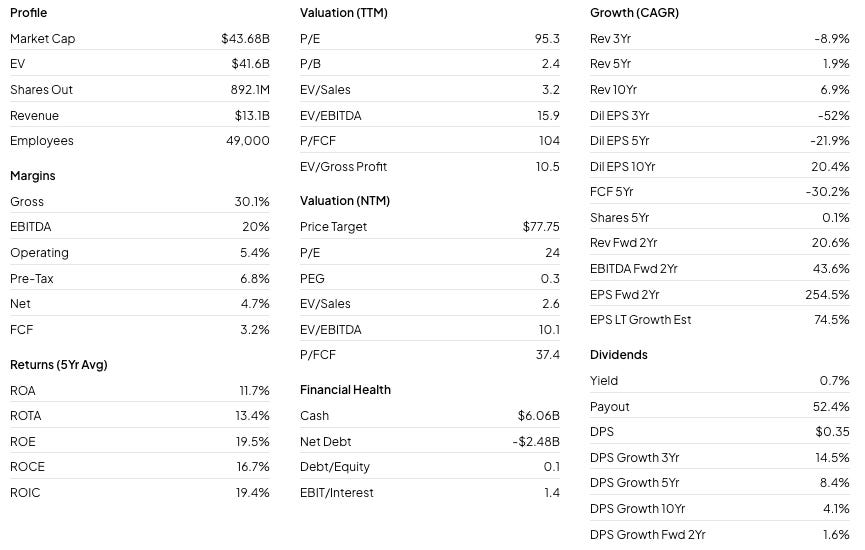
All financials were taken from Fiscal AI’s website. You can access a free trial of the premium offering via the following link, no card required: Fiscal AI
TTM Performance:
Revenue TTM: $13.1 (B)
Gross Profit TTM: $3.94 (B)
Operating Income TTM: $0.71 (B)
Net Income TTM: $0.62 (B)
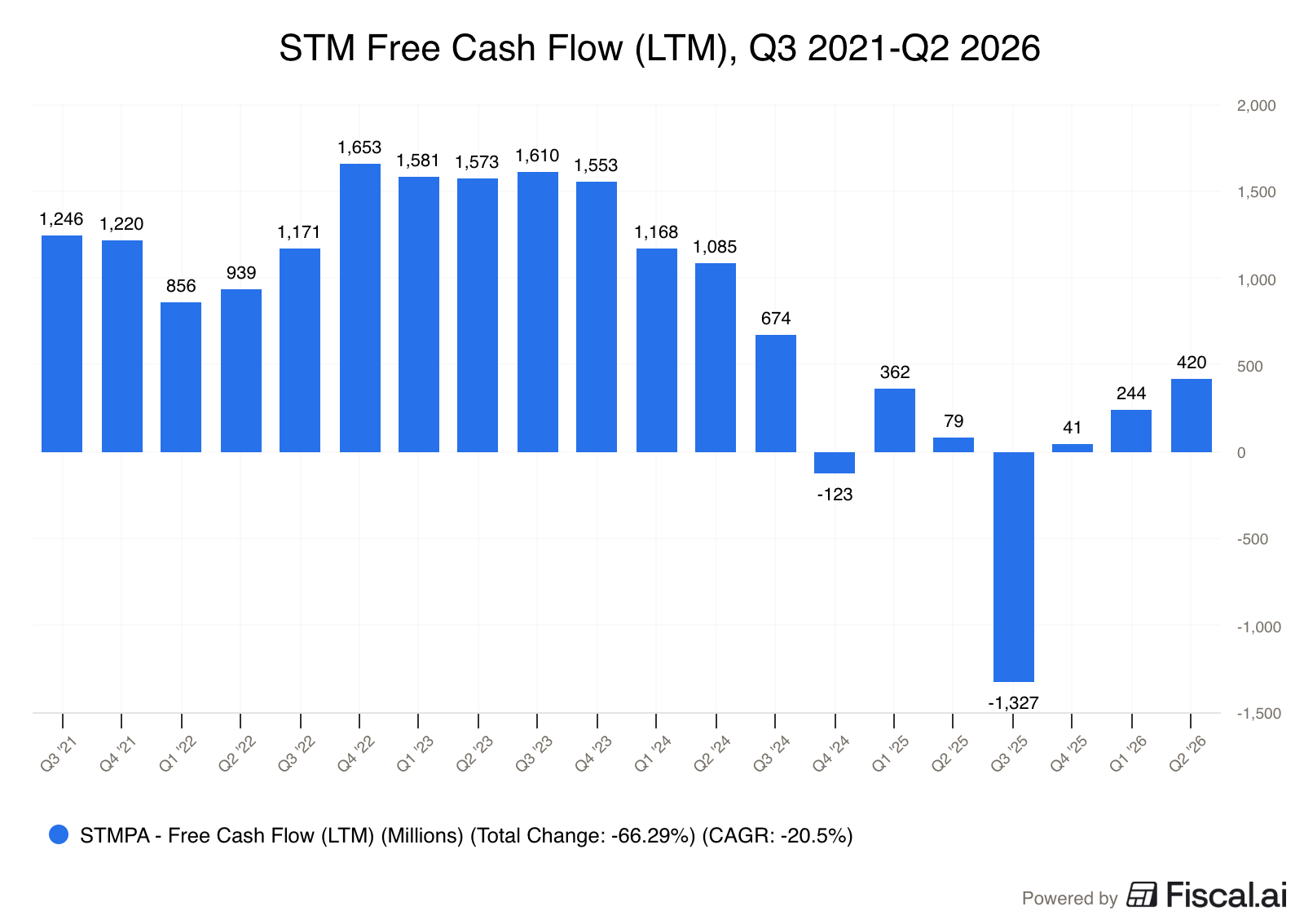
Valuation:
STM trades at:
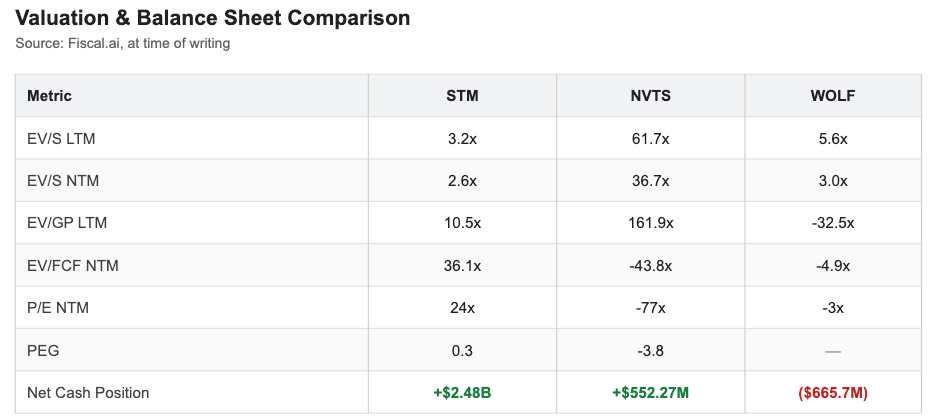
3.2x LTM EV/S and 2.6x NTM EV/S.
16x LTM EV/EBITDA and 10.1x NTM EV/EBITDA
95.7x LTM PE and 24x NTM PE.
104.4x trailing P/FCF and 37.4x NTM P/FCF.
Morningstar’s $72 fair value estimate implies P/E multiples of 55x for 2026 and 23x for 2027. This outlook is based on projected revenue growth of 24% in 2026 and 21% in 2027 (up from prior estimates of 21% and 16%), driven by stronger-than-expected AI and LEO satellite demand. Morningstar models a gross margin recovery from 34% in 2025 to 37% in 2026, climbing to 44% by 2028, alongside a non-GAAP operating margin recovery from a 1.5% trough in 2025 to 22% by 2028. Notably, Morningstar now expects STM to exceed its $18 billion 2028 revenue target (set at STM’s November 2024 capital markets day) purely on the strength of this AI and LEO demand.
Forward Guidance:
Per STMicroelectronics’ own Q2 2026 earnings release (July 23, 2026):
Q3 2026 net revenues are guided at $3.70 billion at the midpoint, up about 6.2% sequentially and 16.2% year-over-year. Gross margin is guided at approximately 37.0%, including roughly 70 basis points of unused capacity charges.
Management expects a revenue acceleration in Q4 2026 to above $4 billion, driven by AI datacentre and LEO satellite communication programs.
AI datacentre revenue is guided above $1 billion for 2026, and, assuming current engagement levels continue, “well above $2 billion” in 2027.
Navitas Semiconductor (NVTS)
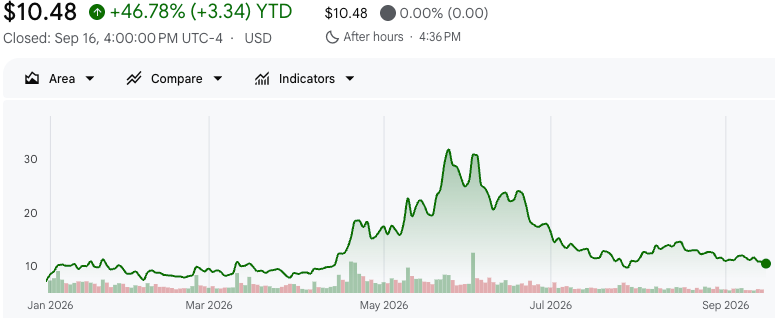
Navitas designs GaN power ICs (GaNFast, GaNSafe) and SiC devices. Its TTM revenue, as of Q2 2026, was $36.53 million against a $2.81 billion market cap, which makes it a highly speculative bet by any conventional measure.
Their primary product offerings span from bare GaN transistors to fully integrated power ICs, as they continue to reposition away from their original mobile charger business towards AI datacentres, grid infrastructure, and industrial electrification.
Bull case
On fundamentals alone, Navitas's current market cap is difficult to justify, but bulls would argue that traditional fundamentals miss the point. As a key partner for NVIDIA’s 800V architecture, Navitas represents a pure bet on business optionality. Backed by an extensive patent portfolio and strong market positioning, the company has the potential to emerge as a clear winner in the transition to 800V.
NVTS’s GaNFast chips combine the transistor, the driver, and the protection circuitry on one die, as opposed to most competitors who sell a bare GaN transistor that a customer has to pair with their own silicon driver. The latter approach leads to needing increased board space and introducing more potential points for failure. According to NVTS, this is the industry’s first integrated GaN power IC.
Their 300 patents (issued or pending) for their integrated power IC and other power semi technologies are why NVIDIA has named them as a collaborator for the 800V HVDC architecture for the Kyber rack and Rubin Ultra GPUs. They supply GaNSafe power ICs at the high-power stages, as well as GaN devices for the secondary-side conversion that feeds the GPUs directly.
NVTS has agreed to acquire Claros for up to $232.8 million, a power delivery company whose technology controls power conversion within the chip package, extending Navitas’s footprint from the rack-power stage all the way into the chip stage, which according to the management doubles their serviceable addressable market (SAM) into 2030 at over $8 billion.
They are repositioning away from mobile and consumer chargers towards AI datacentres, grid infrastructure, and industrial electrification. For Q4 2025 NVTS announced that high-power markets formed the majority of quarterly revenue for the first time in company history. The current revenue trend highlights that NVTS is able to capitalise on increased demand from high-growth industries, shifting away from other “stale” revenue sources.
Navitas is licensing its GeneSiC technology to Magnachip for high-voltage platforms serving grid infrastructure, energy storage, and industrial electrification. This gives Navitas a capital-light business model they can use to monetise its SiC IP through royalties.
Bear case
Wolfspeed is suing Navitas for patent infringement.
In July 2026, Wolfspeed filed suit alleging that many Navitas products, including the GaNFast, GaNSlim and GaNSafe GaN products and the GeneSiC MOSFET and SiCPAK models, infringe five Wolfspeed patents. The suit targets Navitas’s core product families at once, and an adverse outcome could remove their competitive advantage.
A SemiAnalysis report (6 July 2026) found NVIDIA’s Kyber rack architecture, which was critical for the 800VDC content ramp tied to Rubin Ultra, was delayed more than a year, to 2028. Although, NVIDIA has publicly disputed this report stating its roadmap is intact. Given NVTS’s role as a collaborator for the Rubin Ultra GPUs, this creates a sense of uncertainty regarding future deliverables.
Revenues are shrinking
In Q2 2026, their reported revenue was $10.53 million, which is a 27.3% decrease year over year compared to $14.49 million in Q2 2025.
Customer concentration risk is a major concern for NVTS. Reliance on a single distributor peaked at 71% of net revenue in Q2 2026, which is quite extreme.
Financials
At the time of writing, NVTS has a Market Cap of $2.81B with a Net Cash position of $552.27M. Debt to Equity is practically 0.
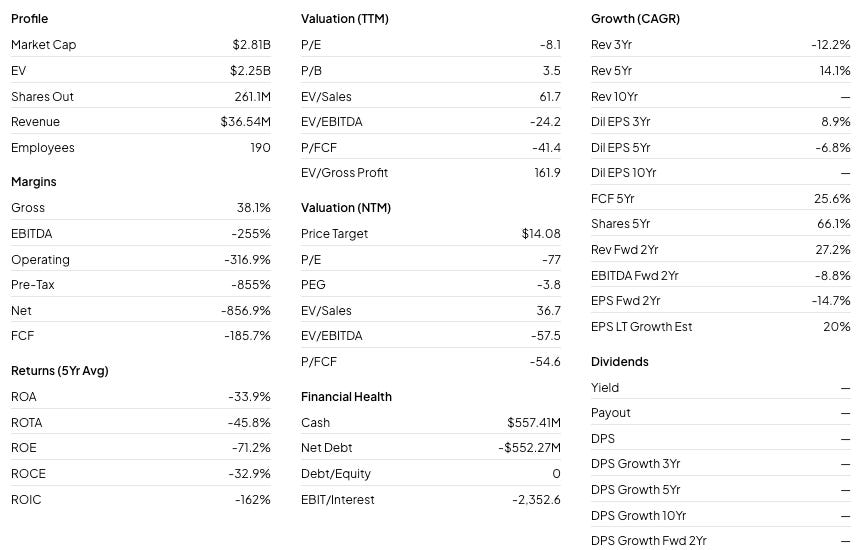
TTM Performance:
Revenue TTM: $36.54 (M)
Gross Profit TTM: $13.92 (M)
Operating Income TTM: -$115.79 (M)
Net Income TTM: -$313.10 (M)
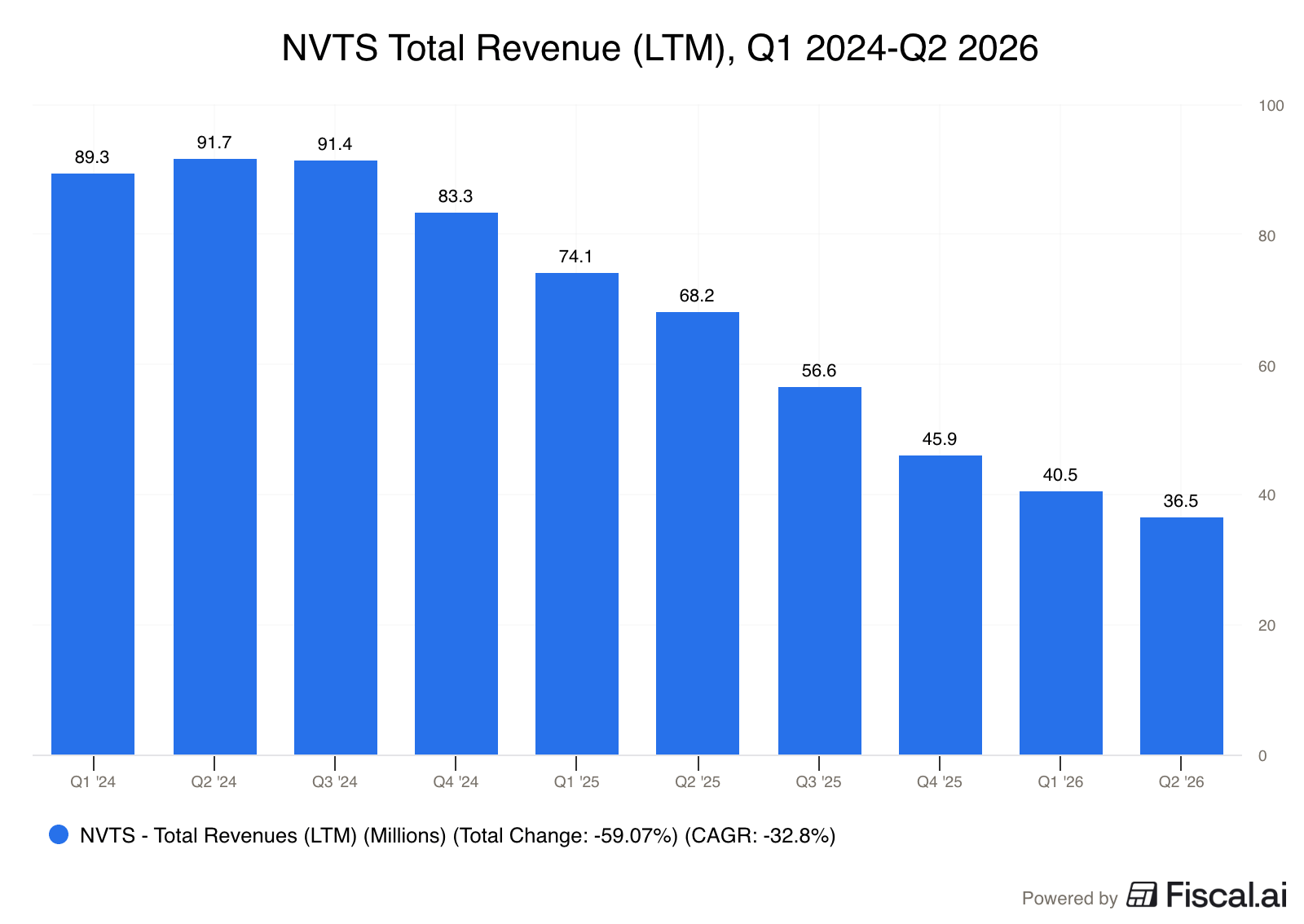
Valuation:
NVTS trades at:
61.7x LTM EV/S and 36.7x NTM EV/S.
-24.2x LTM EV/EBITDA and -57.5x NTM EV/EBITDA
-8.1x LTM PE and -77x NTM PE.
-41.4x trailing P/FCF and -54.6x NTM P/FCF.
Fiscal AI’s estimates show revenue growing to a mean of $47.69M in 2026(E), $74.25M in 2027(E), and $123.90M in 2028(E), though the 2028 estimate carries wide dispersion (analyst range of $97.90M to $170.00M), reflecting genuine disagreement among covering analysts on how the 800V ramp plays out. Fiscal AI’s own generated bear case explicitly names STMicroelectronics, Infineon, and Texas Instruments as competitive threats.
Forward Guidance:
Per Navitas’s Q2 2026 earnings call (reported July 28, 2026):
Q3 2026 revenue is guided at $13.5 million, plus or minus $0.5 million, implying about 28% sequential growth at the midpoint and a return to year-over-year revenue growth.
Non-GAAP gross margin for Q3 2026 is guided at approximately 39.7%, plus or minus 100 basis points.
Management expects AI infrastructure (AI datacentres plus grid and energy infrastructure) to account for more than one-third of total sales by the end of 2026, with mobile and low-end consumer revenue becoming insignificant by year-end.
Wolfspeed (WOLF)
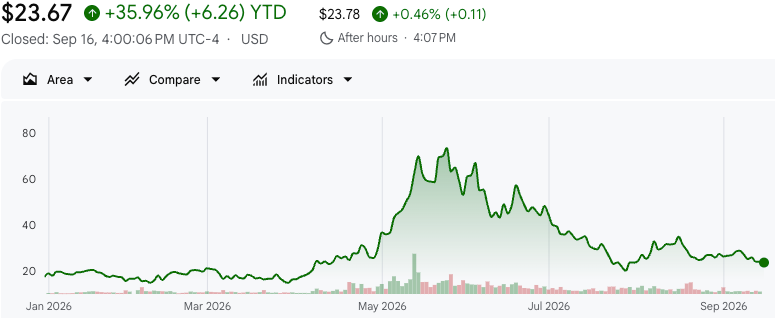
WOLF is a pure play on SiC materials, wafer, and substrate supply. Its history is slightly complicated however, as the company converted roughly $4.6 billion of debt into equity through a 91-day prepackaged Chapter 11 process. By the end of it, they emerged in September 2025 with pre-petition shareholders left holding only 3-5% of the reorganised company.
Bull case
WOLF’s underlying technology looks ahead, as they were first to commercialise 200mm SiC substrates. Their confidence in their technology is also reflected in their lawsuit against Navitas in July 2026, alleging that Navitas’s GaN and SiC products infringe on its patents. Unfortunately, none of that has shown up in the numbers yet, as revenue and margins are still being weighed down by the Chinese pricing pressure. The case for WOLF comes down to whether that gap closes, because the technology edge eventually competes for market share.
WOLF grows its own SiC crystal and wafers rather than buying substrate like other SiC device makers. This let them progress first to 200mm substrates which are now commercially available, while competitors are still scaling up 150mm lines. Worth noting, however, that while their product allows for an edge in simplicity, the revenue trend has not reflected a pricing or design advantage yet.
WOLF and LITEON (an AI power solutions provider), partnered to qualify WOLF’s SiC MOSFETs for its 800VDC power sidecar and compute rack PSU platforms targeting hyperscale AI datacentres. LITEON is also a partner in NVIDIA’s 800VDC architecture, which means WOLF is one step removed from the NVIDIA ecosystem.
Wolfspeed's AI datacentre revenue more than doubled year over year in fiscal 2026, and grew approximately 20% sequentially in the fourth quarter alone, per the company's own Q4 FY2026 results.
WOLF sued Navitas for patent infringement in July for both Navitas’s GaN and SiC product line, which signals WOLF believes its underlying IP position in high voltage SiC is stronger than its stock price reflects. However, whether they win that case or not will be significant for WOLF’s product offerings.
Bear case
Apollo Global is the largest holder of WOLF’s Senior Secured Notes ($1.25B initially, roughly $1.5B currently), positioned at the top of the debt structure in a senior creditor arrangement. In the event of a bankruptcy, shareholders will be wiped out since senior creditors take priority.
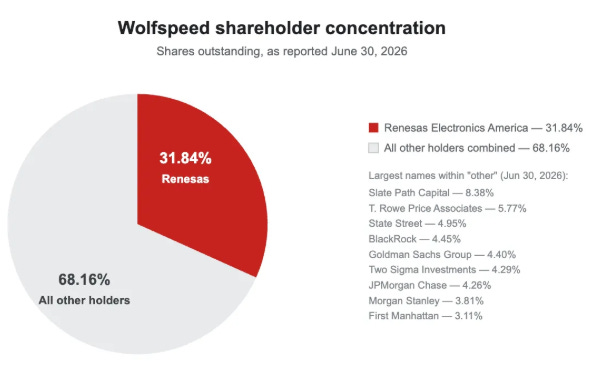
Another issue lies in the shareholder structure. Renesas converted a $2.062 billion deposit into a mix of common stock, convertible notes, and warrants. They ended up with 31.84% of outstanding shares (as of June 30, 2026), making them the largest shareholder. They are also a customer of WOLF’s SiC wafers, which is a potential conflict of interest. If WOLF’s strategic direction ever conflicts with Renesas’s own business goals, individual shareholders may be left at a disadvantage.
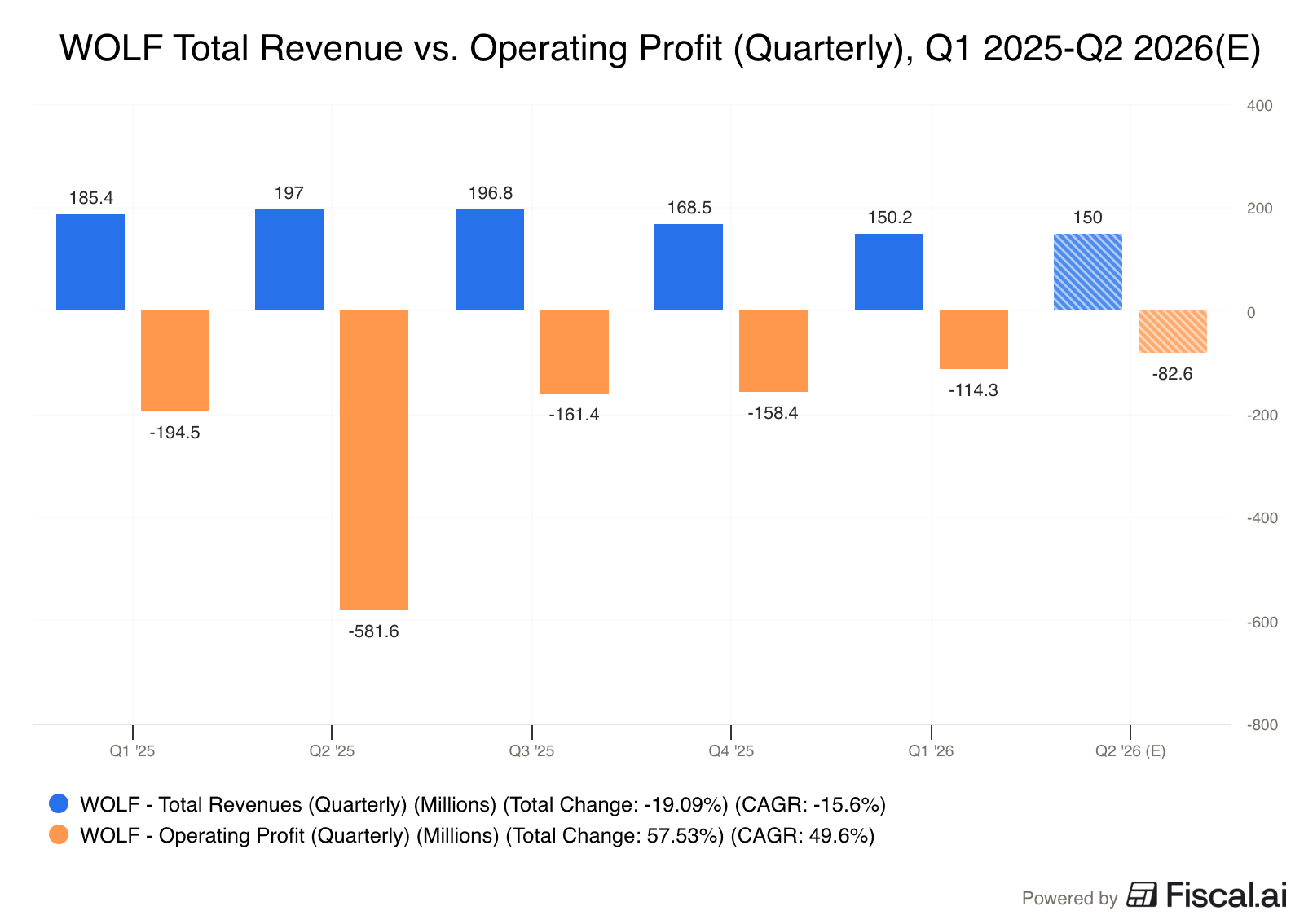
Materials Products revenue fell 45% year over year in the fourth quarter of fiscal 2026, to $43.3 million from $78.4 million a year earlier, per Wolfspeed's own Q4 FY2026 results. on pressure from Chinese SiC substrate producers aggressively increasing capacity while undercutting prices. There is increased competition from Chinese suppliers and WOLF is struggling to keep up. Furthermore, despite AI datacentre revenue doubling YoY, their total revenue was $149.6M in Q4 FY2026 versus $197.0M a year earlier, down 24%
Financials
Note: Predecessor (pre-September 29, 2025) and Successor (post) periods are not comparable because assets and liabilities were reset to fair value on emergence from Chapter 11
At the time of writing WOLF has a Market Cap of $1.29B. As of the most recent quarter reported on Fiscal.ai (March 2026), Net Debt is $557.8M and Debt to Equity is 1.7. WOLF is down 72.5% over the past five years (CAGR: -22.7%).

TTM Performance:
Revenue TTM: $712.5 (M) (Fiscal AI’s consensus table separately shows FY2025 actual revenue, fiscal year ending late June, at $757.6M, so the TTM figure reflects some deterioration since then)
Gross Profit TTM: -$124.0 (M)
Operating Income TTM: -$437.5 (M)
Net Income TTM: -$519.4 (M)
Valuation:
WOLF trades at:
5.6x LTM EV/S and 3x NTM EV/S.
-14.7x LTM EV/EBITDA and 13.3x NTM EV/EBITDA
-7.3x LTM PE and -3x NTM PE.
-4.3x trailing P/FCF and -3.4x NTM P/FCF.
Forward Guidance:
Per Wolfspeed’s Q4 fiscal 2026 earnings release (August 19, 2026):
The company expects revenue between $140 million and $160 million for the first quarter of fiscal 2027.
Non-GAAP gross margin is expected to remain negative in Q1 fiscal 2027.
Non-GAAP operating expenses are guided between $62 million and $66 million for Q1 fiscal 2027.
The table below compares the valuation multiples of the three companies discussed above:
Conclusion:
Among the three names above, we have three distinct stories.
STMicroelectronics makes the strongest case for a value stock in the power semiconductor industry. It is a profitable business where one segment’s losses are dragging down a stock that is underpricing its other growth segments.
Navitas’s case, by contrast, rests on optionality rather than a mature underlying business and a sound financial picture. Despite their different financial profiles, both companies are part of NVIDIA’s 800V buildout.
Wolfspeed currently shares neither of those characteristics and is not one of NVIDIA’s named 800VDC silicon partners, though it is one step removed via its partnership with LITEON. While Wolfspeed's technology may be competitive, the company faces challenges tied to a complex debt and ownership structure.
Ultimately, these are three different names with three different risk profiles, and they should be sized accordingly in an investment portfolio.
Thank you for reading and if you enjoyed this post, please leave a like and Restack.
Subscribe to the plan that best suits your needs and will see you in the next one!